Quiet note
When a Wolf burner clicks and will not light
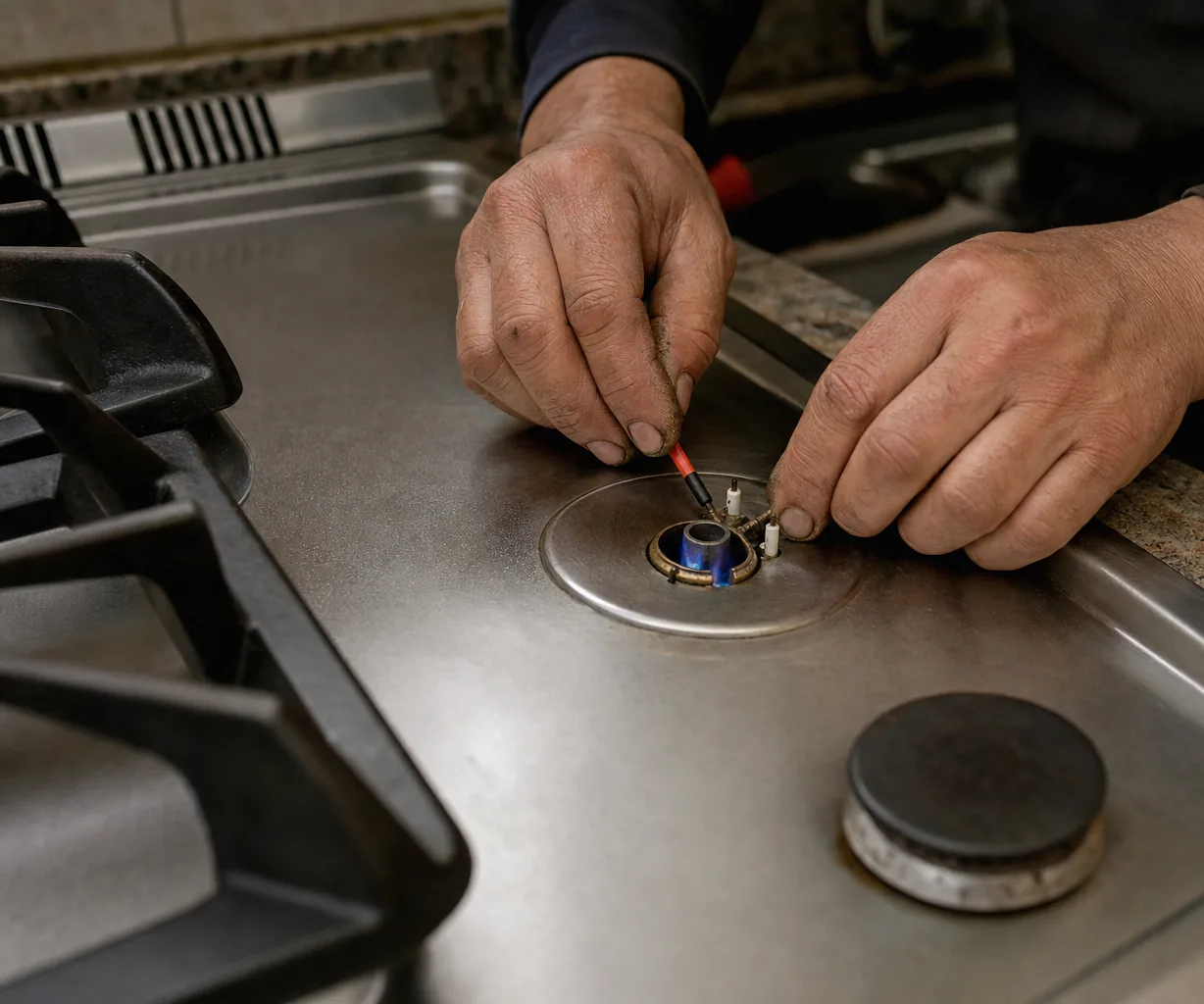
Continuous clicking with no flame is the most common gas call of the year. The pattern of which burners click, and which do not, narrows the fault to one of four things before any tool comes out.
A gas burner that clicks and never catches is the most common call we take that is not weather-related. It is also the one that most often turns out to be something the owner could have settled in five minutes, so it is worth writing down properly.
Before anything else: if you can smell gas and the burner is not lighting, stop. Turn the knob off, ventilate the room, and do not keep trying. Persistent clicking with the gas flowing is releasing unburnt fuel into the kitchen.
Watch the other burners first
On most spark-ignition cooktops and ranges, every electrode fires when any single knob is turned. That behaviour, which sounds like a fault to people who have never noticed it, is the most useful diagnostic on the appliance.
All burners click, one stays dark. The spark module is working and the problem is at that burner. Look at three things in order: the cap, the electrode, and the ports.
Nothing clicks at all. The module, its supply, or the switch stack behind the knobs. This is where the visit becomes ours rather than yours.
Clicking continues after the flame is established. The ignition side is fine and the flame-sensing side is not confirming what is plainly burning. Usually a carboned electrode tip or a cracked ceramic.
The three things to check at a dark burner
The cap. A sealed burner cap has to sit flat and centred on its base. A millimetre proud, or rotated a few degrees off its locating features, and the flame will not carry around the ring or reach the electrode. Lift it, look at the seating surface, and set it down again deliberately. This is the single most common cause after a deep clean.
The ports. The small holes around the burner ring have to be clear. Boil-over sugar, water still trapped from cleaning, and in outdoor appliances the occasional insect, all block them. A straightened paper clip clears a port. A drill bit or a pin will enlarge it permanently, which changes the flame for the worse and cannot be undone.
The electrode. A ceramic insulator with a hairline crack leaks the spark to the nearest grounded metal, so the module fires and the burner never sees it. In low light you can see where the spark actually goes. That is a part, and it is not an expensive one.
Let it dry
Water is a genuine cause and a genuinely easy fix. After a clean, or after a pot has boiled dry across the cooktop, give the burner an hour with the cap off before deciding anything has failed. Outdoors, after a run of afternoon storms, give it longer. A great many grill and cooktop calls in this climate would have resolved themselves overnight.
When the flame is the wrong colour
A burner that lights but burns yellow, soft and slow is not an ignition problem. It is fuel and air. The usual causes are a partly blocked orifice, debris in the venturi, or an appliance running on a gas it was not set up for. Clay County has both natural-gas streets and propane tanks, and a conversion carried out without changing every orifice produces exactly this flame long before anything actually fails.
On propane, a whole appliance that suddenly runs lazy on every burner is usually the regulator’s excess-flow device, tripped by opening the tank valve quickly with a knob already on. Close everything, wait a minute, then open the tank slowly.
When to call
Call when nothing clicks, when the clicking will not stop after the flame is lit, when you can smell gas, or when you have done the cap, the ports and the drying time and the burner is still dark. The flat diagnostic covers finding it properly, and it is credited toward the repair.
Before the estimate
What would this cost to put right?
Flat $80 diagnostic covering the visit and the full diagnostic sequence, credited toward the repair once you approve the work. Everything below it is what that class of repair has actually run here, parts and labour together — a range rather than a single number, because the firm figure is only honest once the fault has been measured.
| What was wrong | Usual total |
|---|---|
| $80 diagnostic visit | $80 |
| Burner valve or orifice service | $210–$650 |
| Igniter or spark module replacement | $210–$540 |
Ranges, not quotes. Which band a job lands in depends on the part and on how much has to come apart to reach it, and that is settled by the diagnostic rather than by the telephone. The written estimate carries one figure and a lead time, and nothing is ordered until you have agreed to it.
Asked on the telephone
Is continuous clicking dangerous?
Not in itself, but a burner releasing gas without lighting should be turned off rather than left to keep trying. Shut the knob, let the air clear for a minute, then try once more. If it still will not catch, stop there and let it be measured instead.
Why do all the electrodes fire at once?
On most spark-ignition designs a single module feeds every electrode, so turning any knob fires the whole set. That is a gift rather than a fault: the pattern tells you whether the module is answering at all before a single part has come off the appliance.
Will cleaning fix it?
Sometimes, and it is worth trying first. A cap sitting proud of its seat, a wet port after a boil-over or a crumb in the slot will each stop a burner catching. What cleaning cannot fix is a cracked ceramic insulator or a lead chafed at its bracket, and that is what the meter is for.